
0
Years of overnight notes
The team records desk hours, lot patterns, and corridor noise on ordinary work trips, not staged tours.
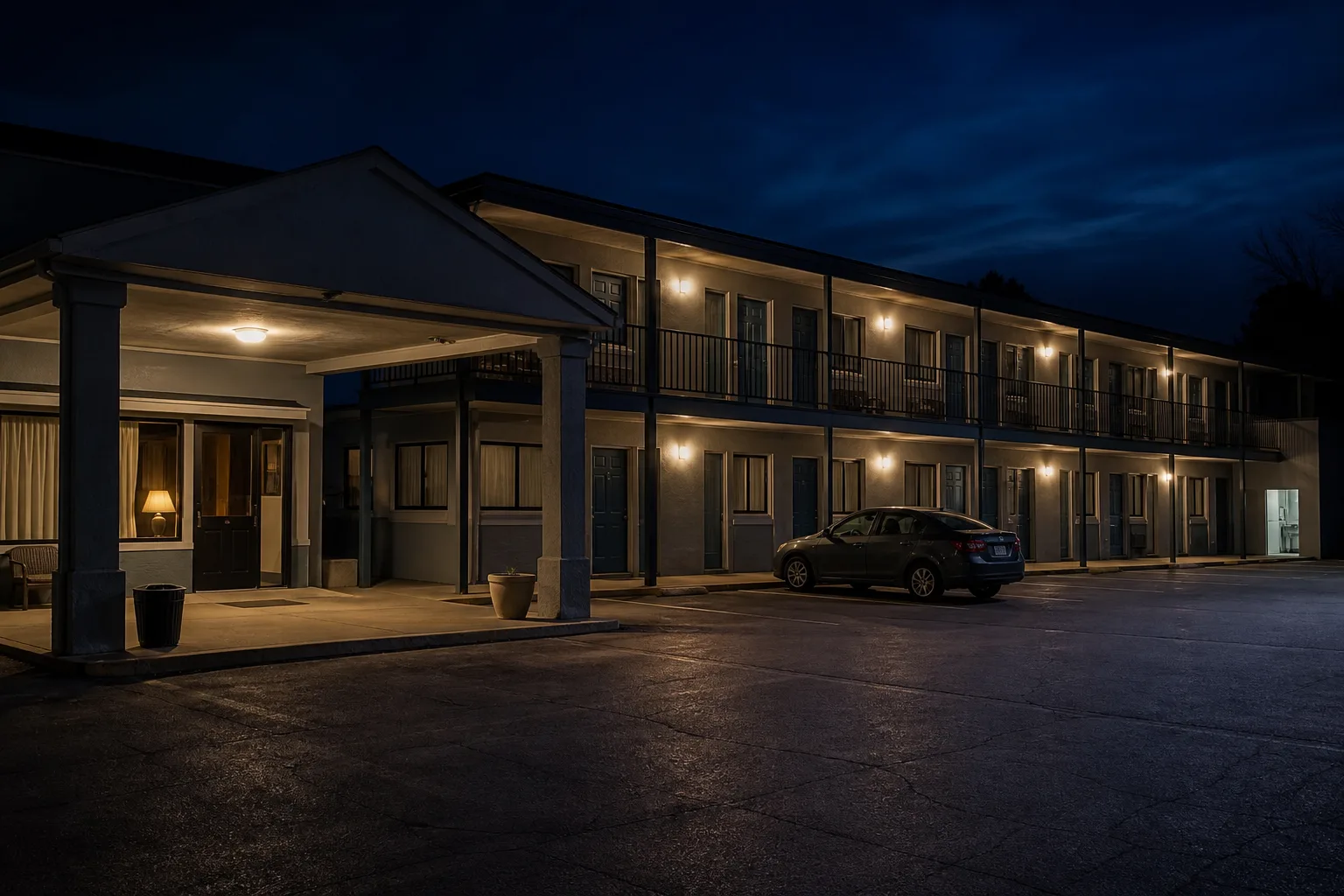
A night stop has a sequence. Regulars already know it. We write it down.
A staffed desk, a numbered door, and a parking stall by the room show the road differently than a shared bunk or a host’s spare key. The hard part is rarely the mattress. It is the order of actions after the last hour of driving: what you say at the counter, where the car goes, where bags land in the first minute, and how you leave before the hallway wakes. actinocyst turns those observations into clear notes and personal consultations for this part of a trip.
Learn More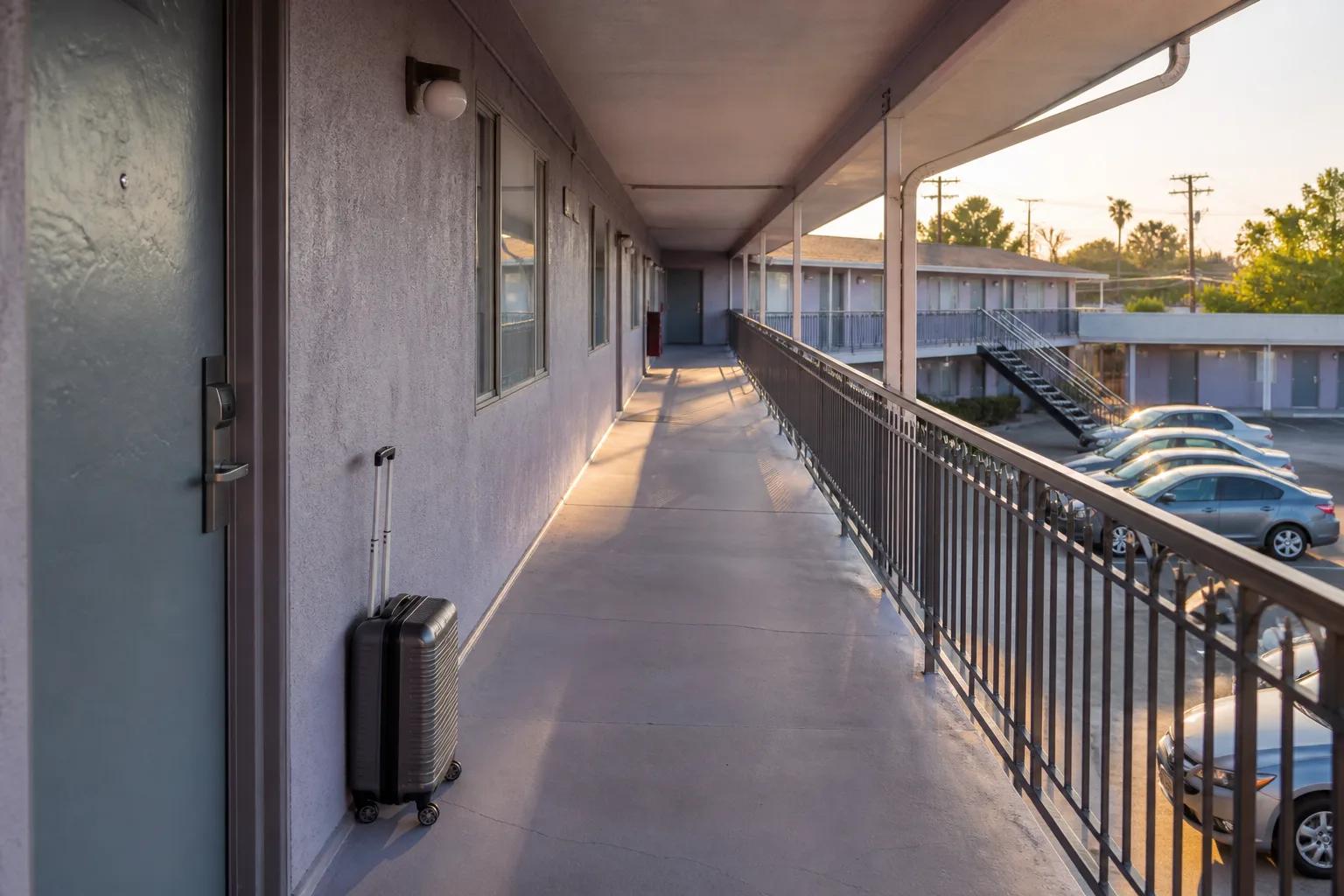
On the route
In a hostel you share a room and a timetable that belongs to everyone. In a house with a lockbox you borrow someone else’s door and try not to meet them. A hotel or motel puts a public counter between you and sleep. That counter, the corridor, the stall by the number plate, and the breakfast room all show how the place actually runs: when people are received, how space by the lift is divided, where a car may sit, and what is left in the room without comment.
The formats look similar from the road and feel different once you are inside. A motor court along a highway often hands you a ground-floor door and a stall painted on the asphalt. A city hotel may send you through a lobby, a lift, and a long carpet before the same key card works. A house with separate outer doors can feel private until you learn that late entry still goes through one night attendant. A property that advertises late arrival may still close the inner office and leave a lockbox whose code expires.
What they share is a sequence that regulars treat as obvious and newcomers have to reconstruct in real time, often after a long drive. actinocyst exists to name that sequence in plain language: how the desk works after posted hours, how the room and the lot are found, and how a first stay can finish without a hallway conversation at dawn.
Before the key
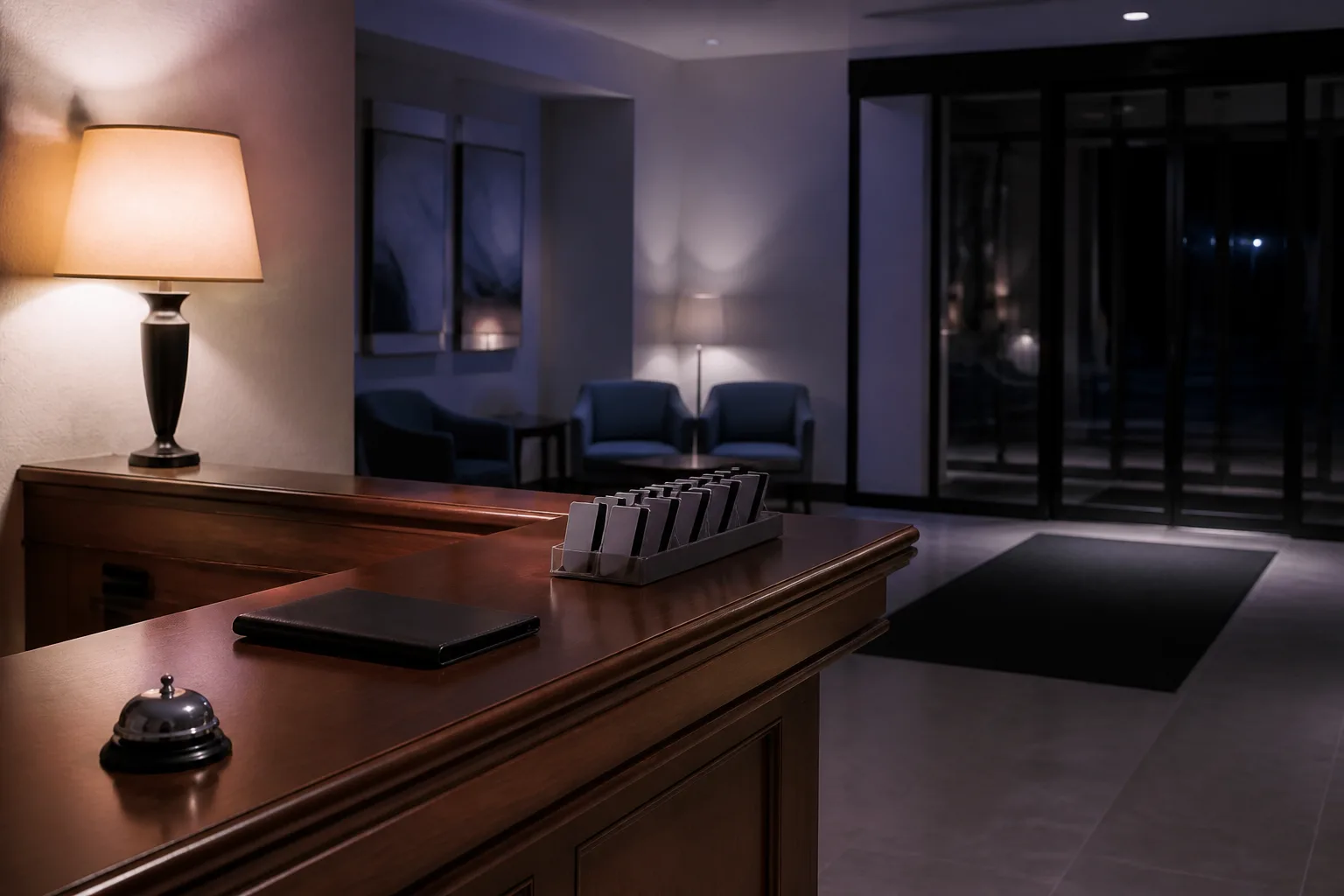
Posted hours on the door are a starting point, not a guarantee. The inner office can go dark earlier, the night window can sit around a corner, and the person who still answers may be covering two properties. That is why late arrival is decided on the phone before the last stretch of road, not in front of locked glass with bags at your feet.
At the counter the first minutes set the rest of the visit. Regulars arrive with a name that matches the booking, a document already in hand, and one clear question: which door, which stall, and whether the ice room and breakfast still run overnight. They do not argue policy at the desk. They confirm the practical map and move.
Call while you still have a place to wait. Ask which door is staffed, whether a lockbox is in use, and what the night attendant needs to see.
Match the name on the reservation, keep documents ready, and ask for the room number, parking note, and breakfast hours in one pass.
Find the door, test the key, set bags down, and check the lock, lights, and water before you unpack. Problems are cheaper to raise immediately than at dawn.
Field notes
These figures come from overnight observation, desk walkthroughs, and written checklists. They are not occupancy scores and they are not a promise of a perfect night. They describe how long we have been taking notes, how many layouts we have compared, and how many late arrivals we have walked through in person.
0
The team records desk hours, lot patterns, and corridor noise on ordinary work trips, not staged tours.
0
Motor courts, downtown hotels, lockbox properties, and mixed buildings with a night window instead of a full lobby.
0
Timed from the last call on the road to the moment the door closes, including cases where the posted hours did not match the light in the office.
0
Short lists for the counter, the room, the stall, shared ice and coffee, and a morning exit that does not hold the desk line.
After the key
Once the key is in your hand, the visit is a set of small placements: where the car sits, where bags land, when the ice room is still a civil place to speak, and how morning movement stays inside your own doorway.
Find the number from the lot or the lift lobby before you wander. Put bags on the luggage rack or a chair, not on the bedspread. Test the lock from inside, run water, and note the nearest ice room and stair. If something is missing, return to the desk while it is still the same shift.
Ground-floor rooms often keep one or two stalls free for late plates. Do not straddle two numbers, do not idle under a window, and do not leave the trunk open toward a neighbor’s door. If the painted stall is taken, ask the desk rather than inventing a space in front of the ice room.
Shared rooms are public even at midnight. Keep voices low, do not hold the ice-room door with a bag, and treat the coffee urn as a queue, not a conversation pit. Breakfast hours can start after your planned exit; if you need food before dawn, settle that the night before instead of rattling trays at first light.
Corridor talk belongs to daylight. Pack before you sleep, skip the ice in the morning, and drop the key in the box if the desk already has a line. For a first stay, choose a simple layout: a ground-floor motor court or a hotel that still staffs a visible night window. Leave without waking the floor and without becoming the person who delays everyone behind you at checkout.
The desk, the lot, the corridor
The team stays in hotels and motels on ordinary trips and writes down what the sign does not say. Each person holds a relevant workshop credential; none of this replaces a property’s own rules or a conversation with the night attendant in front of you.

Arrival Sequence Advisor
Guest Arrival Desk Certificate, Lodging Front Office Workshop
Elena records what still happens after posted hours: which window is staffed, which documents sit on the counter, and how a late guest is walked to a room without a long lobby exchange.
Roadside Layout Researcher
Motor-Court Operations Field Certificate
Marcus maps stalls, ice rooms, and stairwells where the door faces the lot. His notes cover which spaces stay empty for late plates and how far a ground-floor room sits from the office.
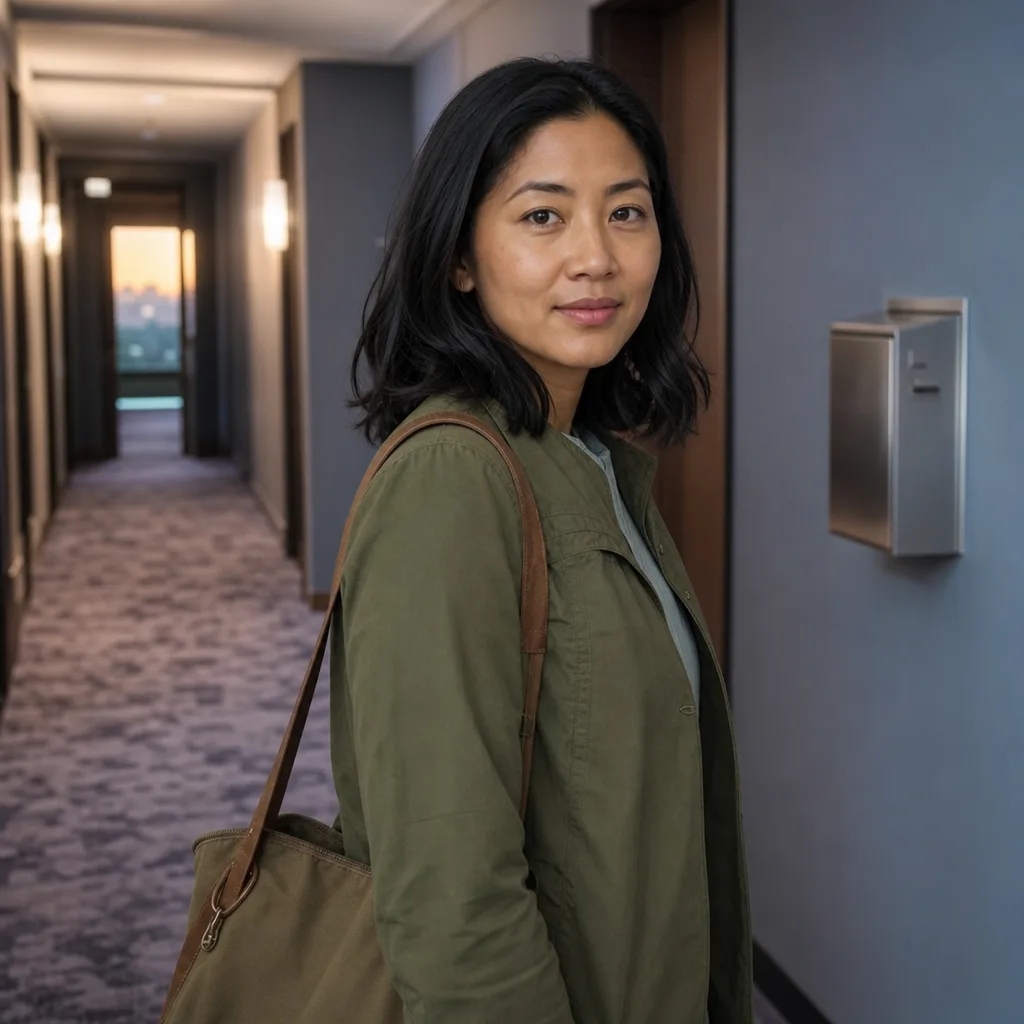
Quiet Hours Observer
Overnight Guest Conduct Workshop Certificate
Priya times corridor noise, breakfast light-up, and morning checkout lines. Her work is for people who need a clean exit before the hallway fills.
From the road
These notes come from consultations, not from staged stays. Each person arrived with a specific snag: a dark office, an unfamiliar lot, or a morning that had to stay quiet.
If a late desk, a confusing lot, or a first motel stay is the part you want to walk through, write to us with the layout you expect and the hour you plan to arrive. We answer with a practical order of actions, not a packaged trip.
Request a Consultationactinocyst provides knowledge about hotel and motel nights as a distinct part of a route. We compare formats, write down the sequence that regulars skip saying, and offer personal consultations on arrival, the room, the lot, shared rooms, and a quiet morning exit.
Learn MoreInformation on this site is intended to introduce our consultations and to share knowledge about hotel and motel stays: desks, keys, rooms, parking, shared ice and coffee rooms, and morning checkout. The pages are educational and informational in character. They describe common patterns we have observed; they are not a substitute for the rules posted on a property or for the person at the night window.
Conditions change between trips. Desk hours, lockbox codes, breakfast times, parking notes, and house rules can shift without a public announcement. Confirm details directly with the property before you leave, then confirm again if your arrival time moves. A note that was accurate on one journey can be wrong on the next.
actinocyst does not manage hotels, issue keys, or operate a booking desk. We do not promise an easy night, a silent corridor, or a desk that matches its sign. We also do not treat lodging advice as guidance on rest, health, or fatigue after driving. For questions about sleep, stamina, or wellbeing, speak with the relevant specialists. For questions about a specific property, speak with that property.
Any decision about where to stay, when to arrive, and how to move through a building is yours. Read the materials, ask us for a consultation if the sequence is unclear, and then verify the live details yourself. actinocyst is not responsible for choices made on the road or at the counter.