Quiet Morning Exit Without Waking the Floor
The loudest part of many overnight stays is not the arrival. It is the morning: rolling bags, ice buckets, corridor talk, and a desk line that forms before breakfast opens. A quiet exit is a sequence you set the night before, not a hope you invent at first light.
Decide the exit while the hallway is still empty
Guests who leave cleanly rarely improvise at dawn. They decide the night before whether they need ice, coffee, or a breakfast tray, and whether the key goes back to a person or into a drop box. That decision removes the scramble that wakes neighbors: opening drawers twice, hunting for chargers, and dragging a half-packed bag past closed doors.
Start with the clock you actually face. If you must be on the road before the desk is staffed, treat the drop box as part of the plan, not as a backup. If the desk will be open, decide whether standing in that line is worth the noise and the wait. Many early exits are quieter when the key never returns to a crowded counter.
Confirm the property’s own checkout note when you arrive, then confirm again if your departure hour moves. House rules change. A note that worked on one trip can be wrong on the next.
Pack for silence, not for speed alone
Speed without order still rattles a corridor. Packing for silence means finishing the noisy work before you sleep: zippers, hangers, bathroom bottles, and the last sweep under the bed. Leave only what you will touch in the dark: shoes by the door, outer layer on a chair, documents in one pocket.
- Empty drawers and the bathroom shelf before you turn in for the night.
- Stage bags on a rack or chair, not on a bedspread you will need to remake by feel.
- Set shoes, keys, and glasses where you can find them without switching on every lamp.
- Place the key card or fob where the drop box or desk handoff will be obvious in the morning.
- Write down the checkout time you were told, in case the sign by the elevator differs.
If you travel with more than one person, agree who opens the door and who carries the first bag. Two people negotiating roles in a hallway is louder than one person moving with a plan.
A quiet exit is less about moving faster and more about moving fewer times. Every return trip to the room for a forgotten charger is another door slam the floor did not need.
Skip the rooms that wake the building
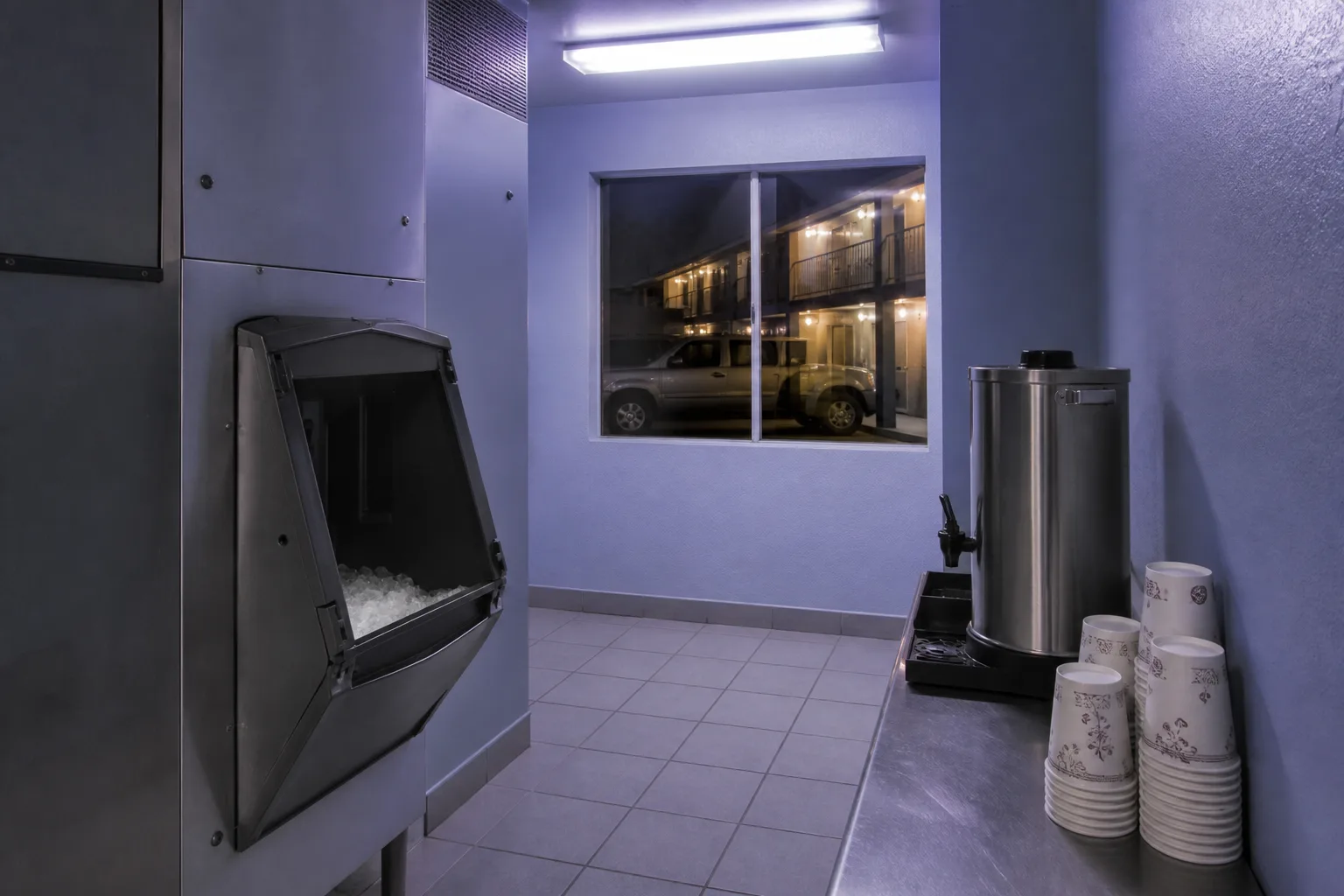
Ice machines, coffee urns, and early breakfast trays are honest needs, but they are also public sound. If your exit is before those rooms settle into daytime noise, skip them. Fill a bottle the night before. Eat later on the road. Do not hold an ice-room door with a bag while you talk.
- Ice runs under windows are a common source of early complaints.
- Coffee urns invite conversation even when voices stay low.
- Breakfast trays and metal lids carry farther than guests expect.
- Elevator lobbies amplify rolling luggage if you wait there longer than needed.
When you must use a shared room, keep the visit short, keep the door from slamming, and keep talk for later. The goal is not to vanish as a person. The goal is to avoid becoming the floor’s alarm clock.
Move through the corridor like it is still night
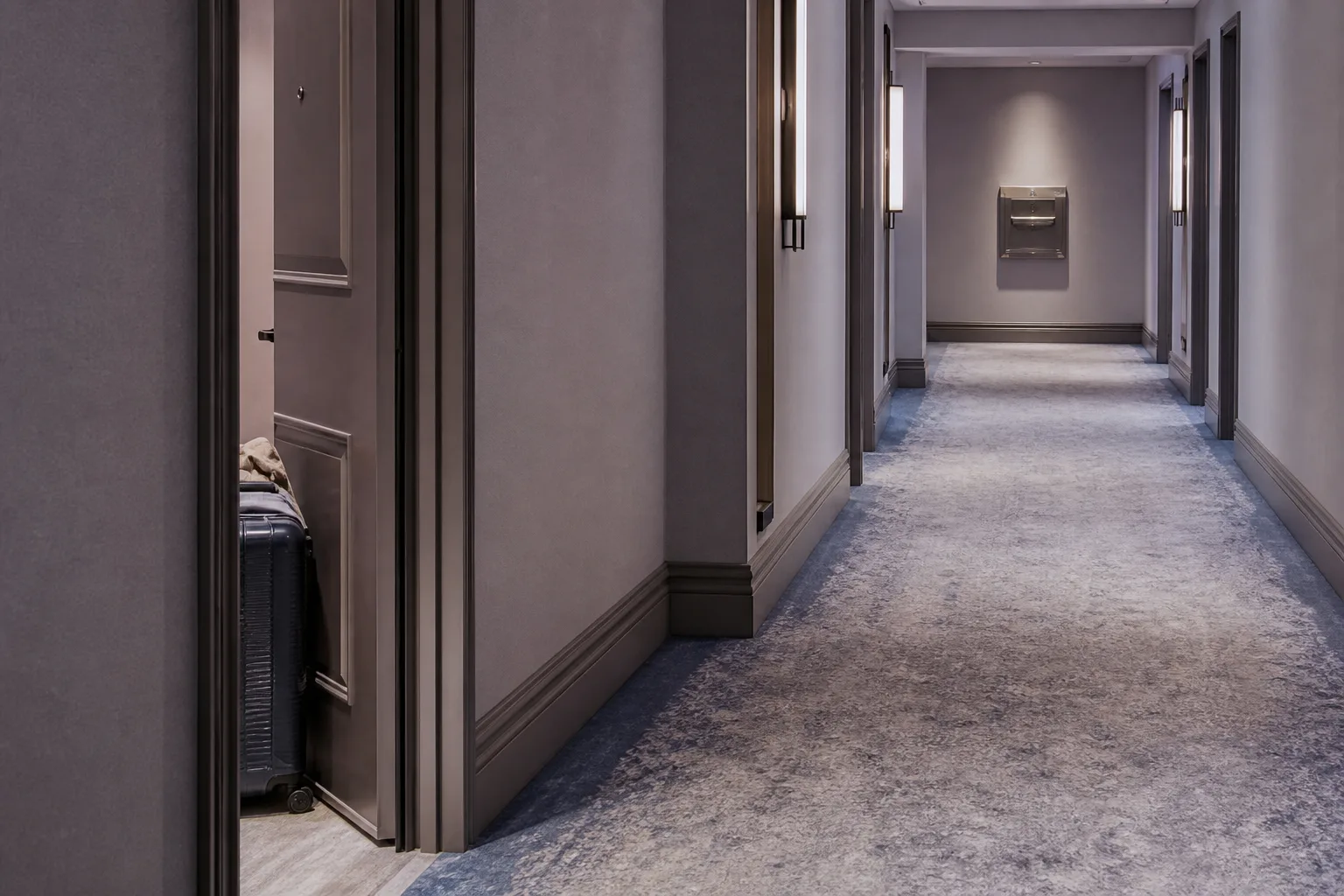
Corridor etiquette at dawn is simple and strict. Close your door with a hand on the latch. Lift bag wheels over thresholds instead of dragging them. If you need to speak, step back into the room or wait until you reach the lot. A whispered conference outside a neighbor’s door still travels.
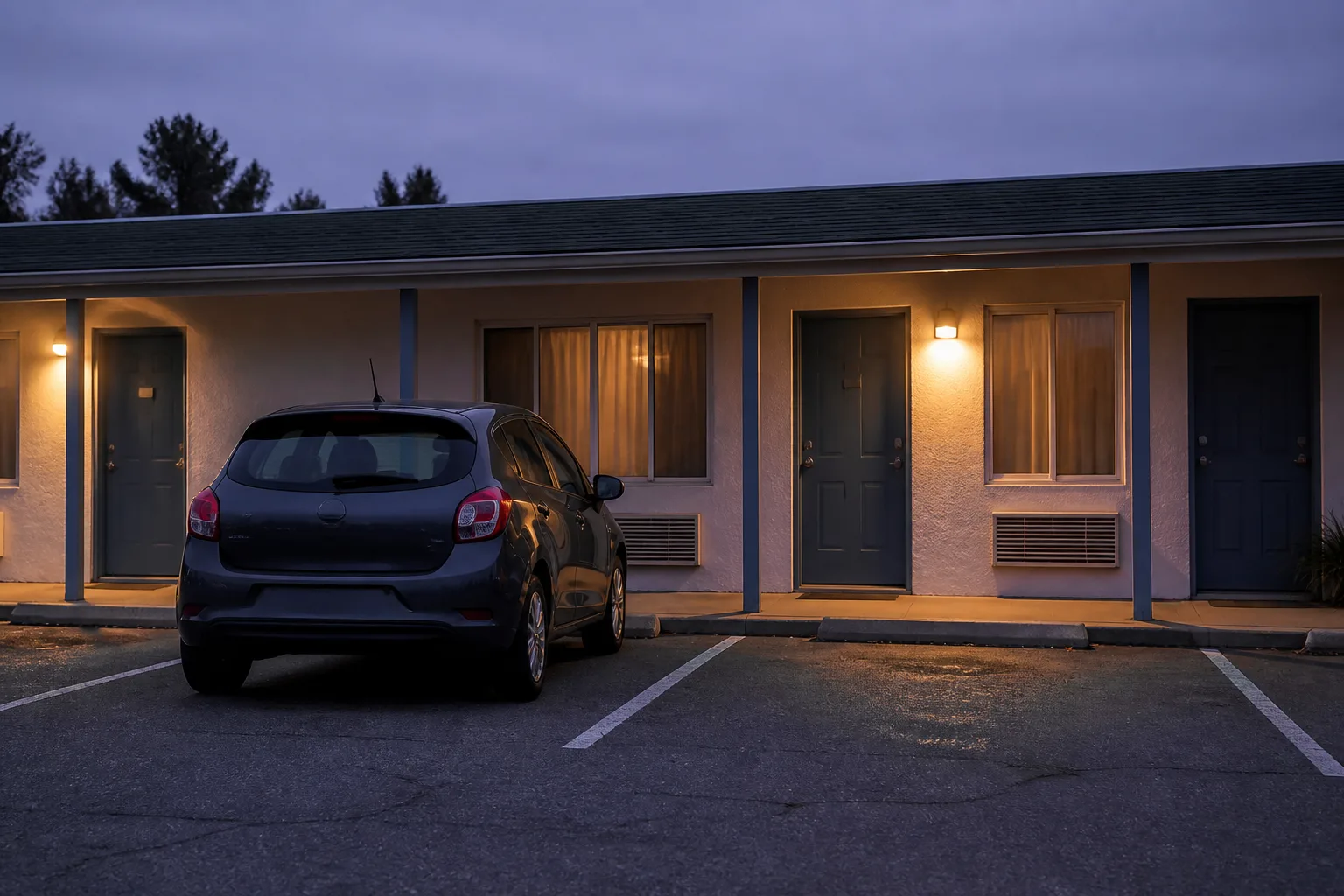
On ground-floor motor courts, the same rule applies to the walkway and the stall. Do not idle under a window while you rearrange the trunk. Load once, shut the lid once, and leave. If a stall is blocked and you need a minute to sort bags, do that work away from numbered doors when you can.
At a tower hotel, choose the stair only if you already know it and can keep bags quiet. Otherwise take the elevator in one trip. Multiple elevator calls with partial loads wake more rooms than one careful ride.
Return the key without joining a noisy line
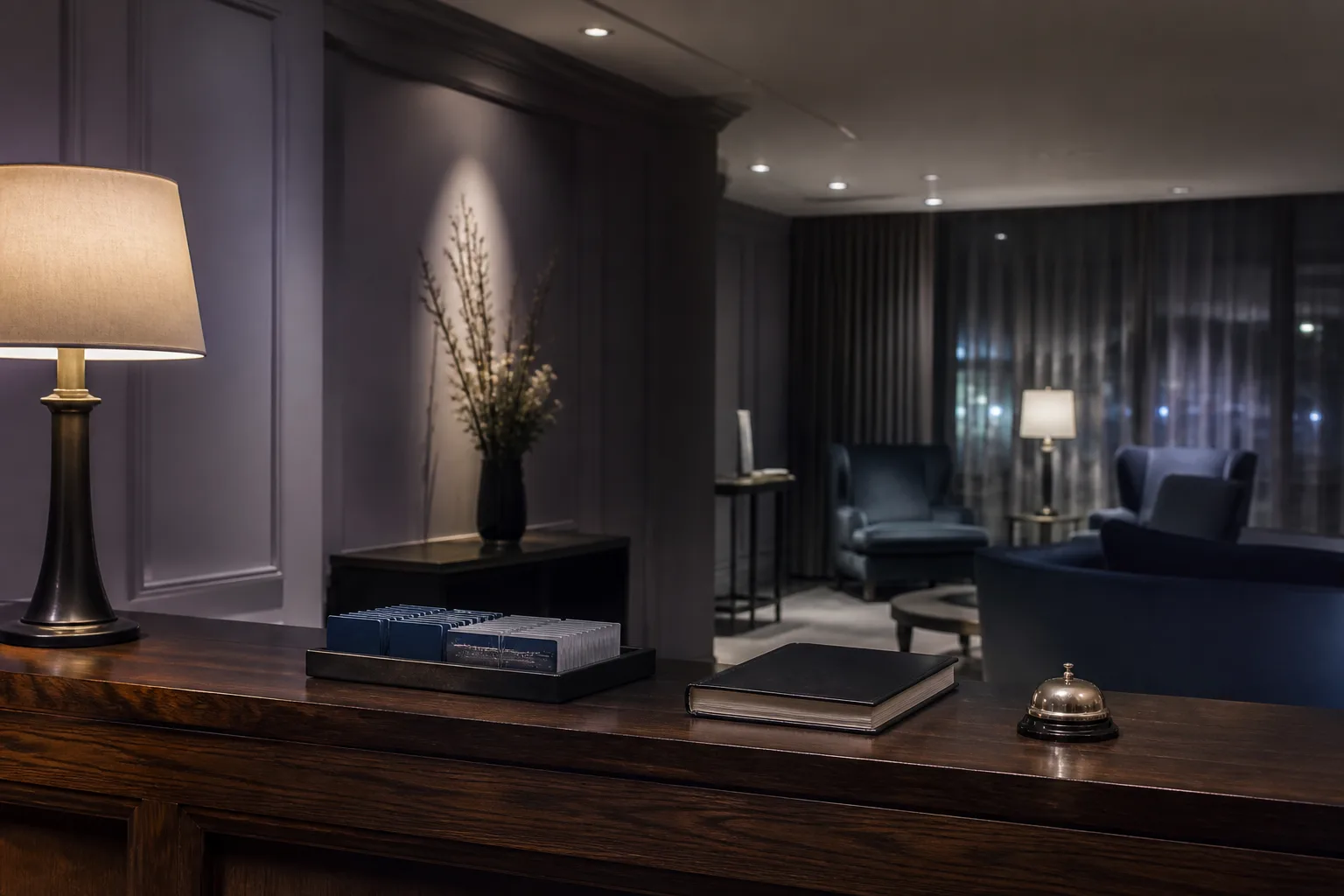
Key return is where quiet plans often fail. Guests who meant to leave silently end up in a morning queue with rolling bags and long questions about receipts. If a drop box is available and your checkout allows it, use it. If you must see the desk, keep the exchange short: name, room number, key, done.
Ask about express checkout when you arrive, not when you are already late. Some properties email a folio; others leave a slip under the door. Knowing the method the night before keeps you from inventing a loud solution at dawn.
None of this replaces the property’s rules. It is a practical order for the minutes between a packed room and an empty hallway. Confirm the live details, then move as if every closed door still holds someone asleep.