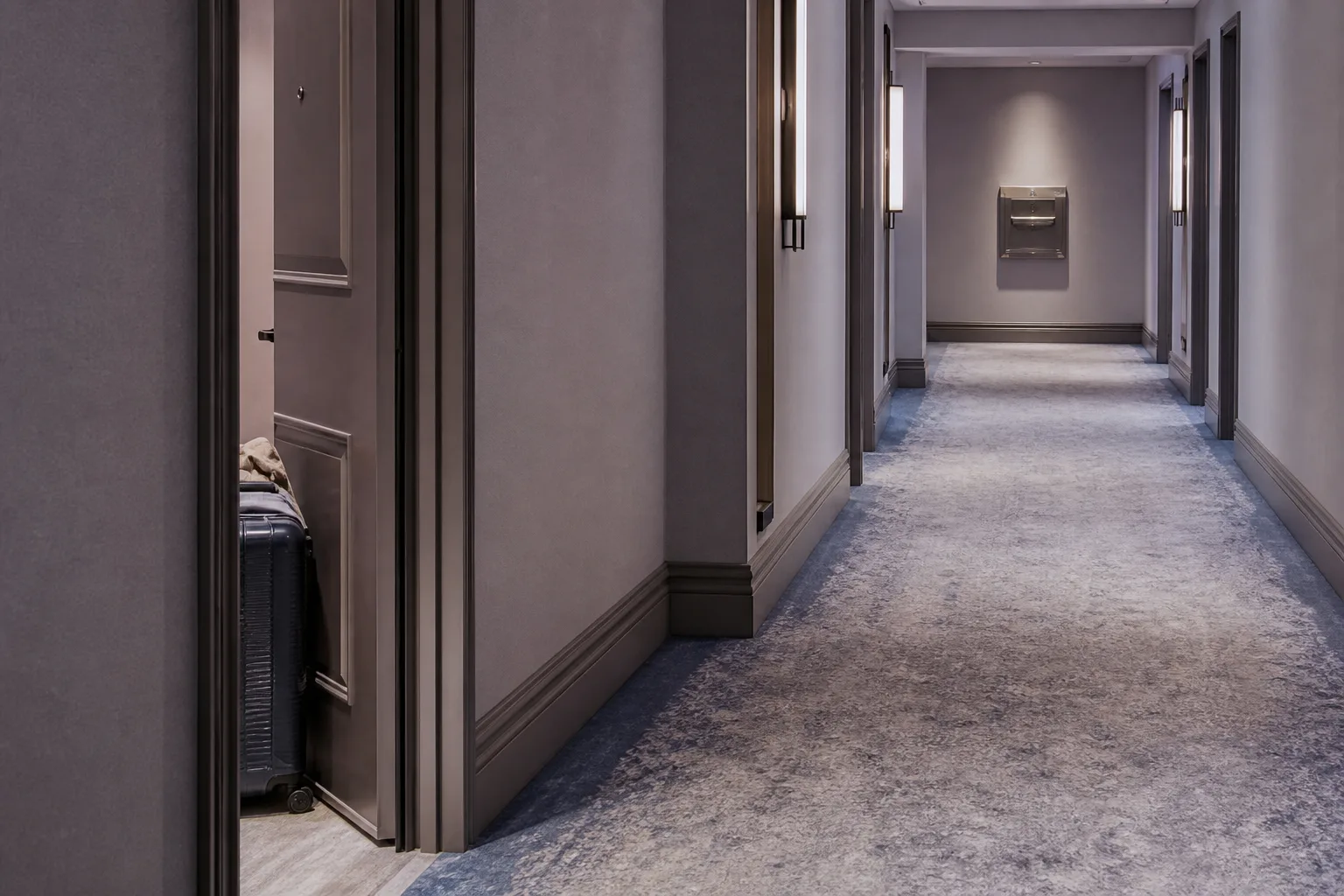
Settle Late Check-In Before You Reach the Desk
Posted hours on a glass door are a starting point, not a guarantee. The inner office can go dark early, the night window can sit around a corner, and a lockbox code can expire. Late arrival works when you settle it on the phone before the last stretch of road.
Call while you still have somewhere to wait
The common mistake is saving the call for the curb outside locked glass. By then you are tired, bags are out, and the only options are a dark lobby or a long drive to the next property. Call earlier, while you still have a safe place to pause if the answer is complicated.
Say your name exactly as it appears on the reservation. Give the hour you expect to arrive, not a vague “late.” Ask which door will be staffed, whether a side window or lockbox is in use, and what the night attendant needs to see. Write the answer down. Memory fades after a long drive.
If you are sharing the trip, put the same notes in both phones. One dead battery should not erase the only copy of a lockbox code or a side-door instruction.
Choose a call window that still leaves you options. Mid-route rest stops, a lit gas station, or a place you already know how to leave again are better than the final curb. If the attendant says the office closes before you can arrive, ask what the property recommends next—another door, a held key, or a clear no so you can adjust while you still have fuel and patience.
Questions that shorten the handoff
- Will the main lobby still be open, or should I use a night window or side door?
- Is a lockbox in use, and does the code expire after a set window?
- Which document should I have ready at the counter?
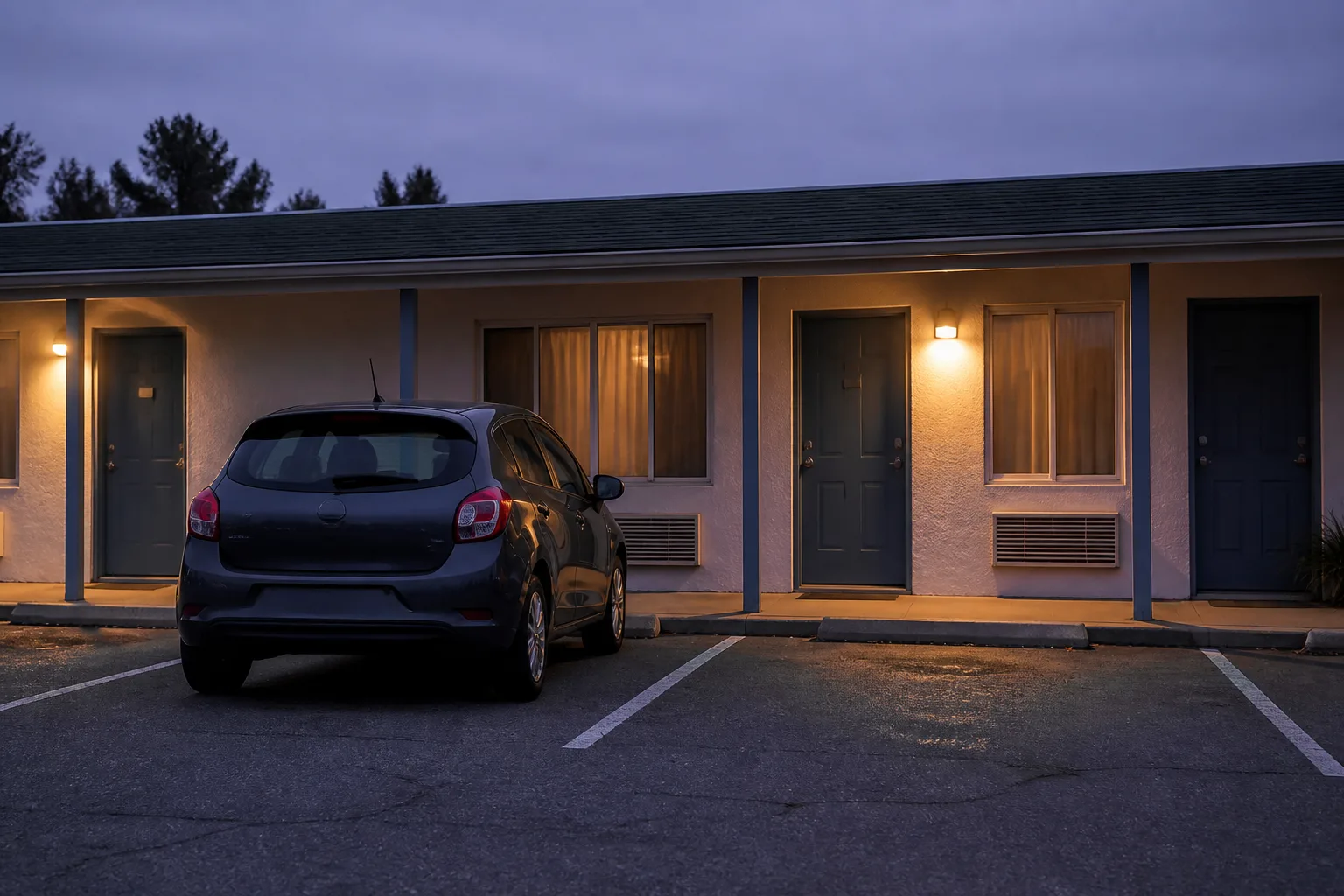
- Where should I park for a late plate, and is a stall held near my room type?
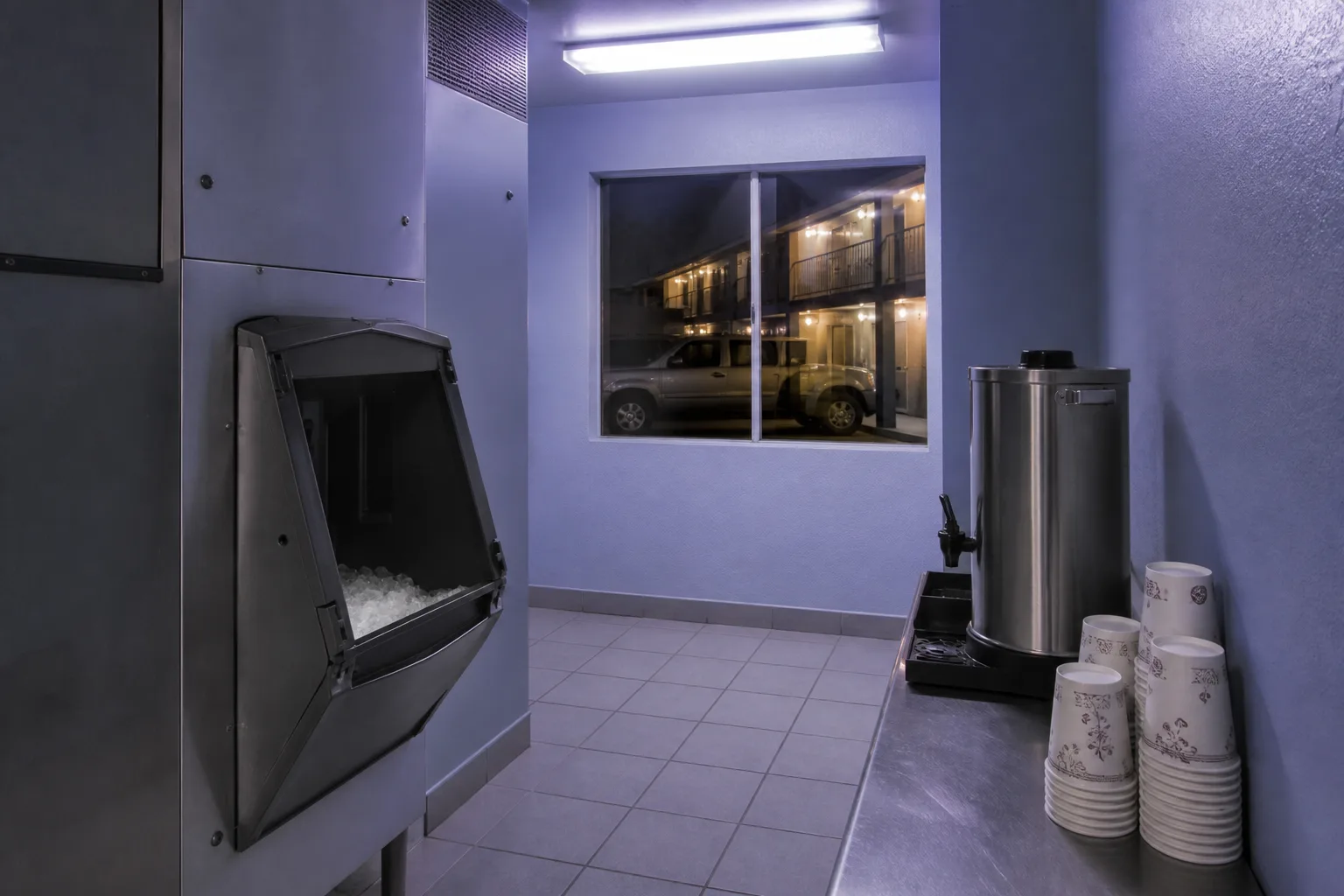
- Are ice, coffee, or breakfast still available overnight, or should I plan without them?
One clear pass is better than five scattered calls. If your arrival time moves, call again. A code or window that worked for the first plan may not hold for the second. Treat the second call as part of the sequence, not as a failure of the first.
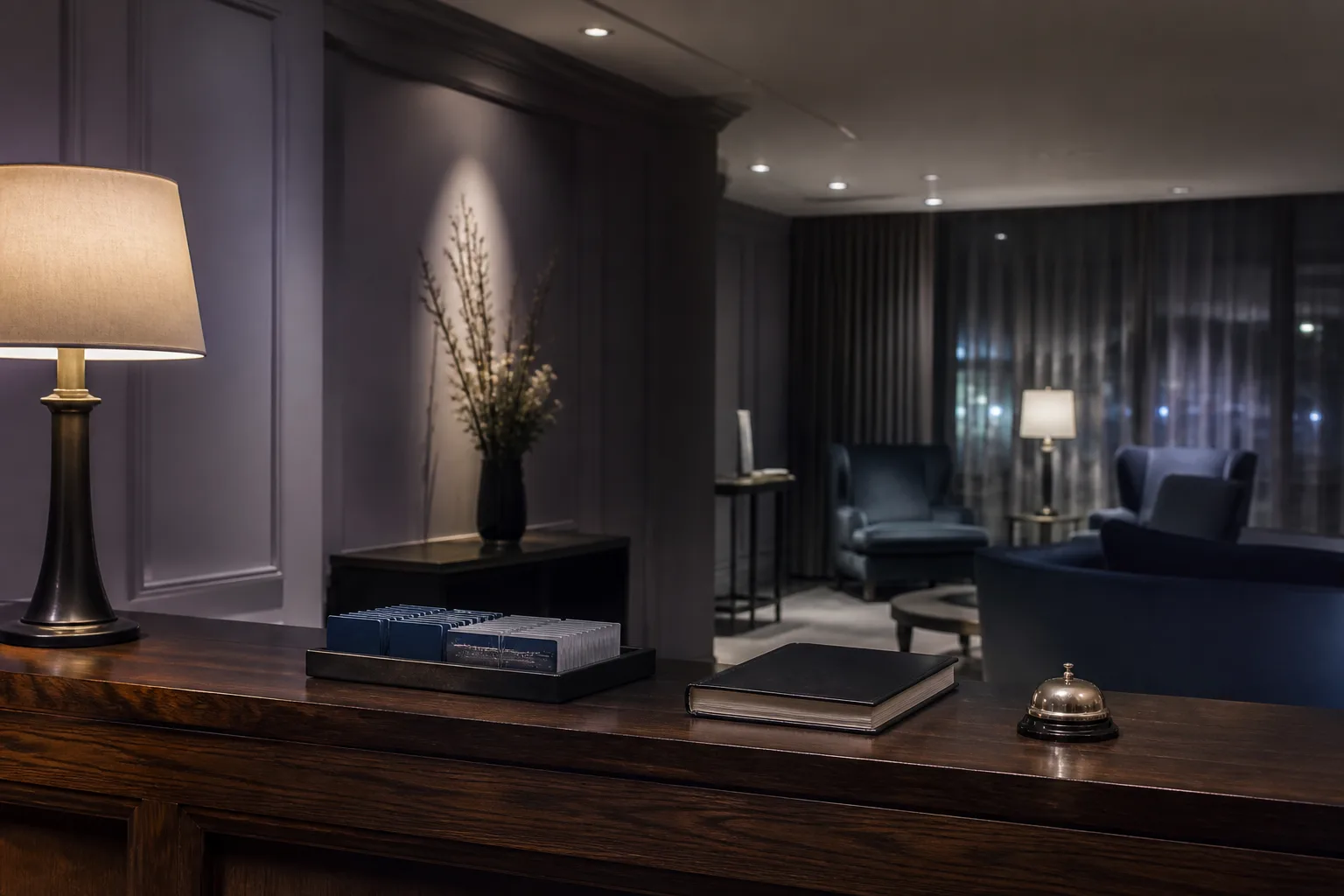
The first minutes at the counter set the visit. Arrive with the name that matches the booking, the document already in hand, and one map question—not a debate about policy under a dim lamp.
At the counter: brief, exact, finished
When a person is still at the desk, keep the exchange short. Place the document on the counter. Confirm the room number, the parking note, and whether quiet hours have already begun. Thank them and move. Long stories about traffic help no one when another guest is waiting in the dark behind you.
- Match the reservation name before you start explaining delays.
- Ask for the stall or garage instruction in the same breath as the room number.
- Test the key before you unload the entire car at a distant curb.
- Raise missing towels or a broken lock while the same shift is still on.
If you meet a lockbox instead of a person, follow the instructions you were given. Do not guess codes from older messages. Do not leave the box open. If the code fails, call the number on the door before you start knocking on numbered rooms. A failed code is a phone problem, not a hallway problem.
After the key works, take thirty quiet seconds inside the room before you haul every bag from the car. Check the lock from the inside, note the nearest stairs or exit, and confirm the parking note still matches what you were told. A short pause beats a second trip to the desk with the trunk still open under a neighbor’s window.
When the sign and the light disagree
Sometimes the door sign says open and the office is dark. Sometimes the reverse is true: a small night window is still staffed around the corner. Walk the entrance once, look for a bell or a lit slit of glass, and use the phone number you already saved. Standing in front of locked doors with the trunk open is how late arrivals become stranded arrivals.
If you must wait, wait where the attendant told you to wait—inside a lit vestibule, beside a marked window, or in the car with the hazards off and the engine quiet. Do not pace the corridor of occupied rooms looking for an unofficial entrance.
Weather and construction change the same entrance from one week to the next. A side door that worked on a prior trip may be chained; a lobby that used to stay lit may now close early. Treat each booking as new: the phone call is the map, not the memory of last season.
None of this replaces the property’s rules. Confirm the live details for your booking, then treat the desk handoff as a short sequence: call early, arrive prepared, ask for the map, and close the door on a visit that started calm instead of stalled.